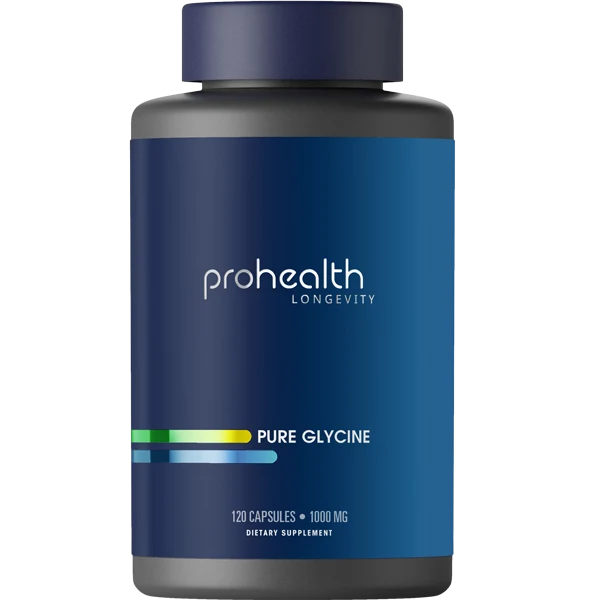
Glycine is an amino acid that supports the central nervous system and sleep quality. It is considered a conditionally essential amino acid–this means our bodies produce glycine, but often not enough to meet our needs. Glycine is an important precursor for many critical molecules, including glutathione, the body’s master antioxidant. Glycine can help support:
- Improved sleep quality and duration*
- Healthy neurological function*
- Healthy aging and glutathione production*
Supports healthy sleep quality. Certain cells in the central nervous system contain glycine receptors. Glycine is thought to influence intracellular ion communication and may act as an inhibitory neurotransmitter to help calm the nervous system. Additionally, glycine may also support sleep quality by helping to reduce core body temperature. Lowered nighttime core body temperature has been associated with healthy sleep patterns.*
Clinical studies involving glycine supplementation have reported improvements in sleep quality and feelings of next day energy and mental clarity.*
Supports neurological health. Age-related declines in memory and learning have been associated with changes in the NMDA receptor system. NMDA receptors are a group of ion channels that support memory and synaptic plasticity. Glycine may help support biochemical pathways related to the NMDA receptor system.*
Supports healthy aging and glutathione production. Increased oxidative stress is a hallmark of aging. As we age, glutathione (our body’s master antioxidant) decreases over time. Glycine, as a building block of glutathione, can help optimize glutathione production. A clinical study involving supplementation with glycine and N-acetyl cysteine (another glutathione precursor) observed improvements in glutathione levels and several aging hallmarks.*
Preclinical evidence suggests that glycine may also act as an autophagy activator and help clear methionine from the body, two important roles in supporting longevity.*