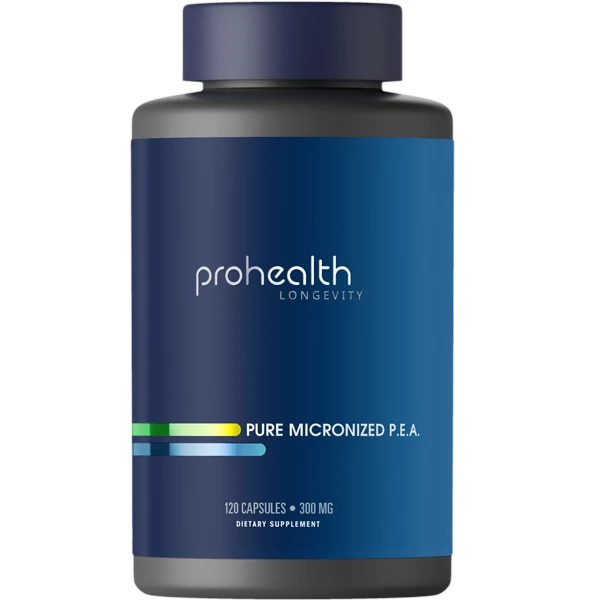
P.E.A. (palmitoylethanolamide) is a molecule that is naturally present in all tissues of the body. It acts through the body’s endocannabinoid system to support temporary aches and pains. Technically classified as a lipid mediator, PEA works by indirectly activating cannabinoid receptors. Cannabinoid receptors work through the endocannabinoid system to help maintain balance throughout the body and help regulate many processes, including cellular metabolism and immune modulation, making PEA a standout molecule for supporting overall wellness and healthy aging.*
Typically, PEA supplements have poor bioavailability. That's why ProHealth’s PEA utilizes micronized technology to ensure optimal absorption and maximum bioavailability in your body.
Benefits:
- Protects cells from injury and everyday stress*
- Supports a healthy inflammatory response*
- Temporary relief from minor pain due to overexertion*
- Supports healthy aging and longevity*
- May support a good night's rest*
Supports cellular repair and a healthy inflammatory response.* The body produces PEA to protect cells from injury. PEA levels may decline during imbalanced states. Supplementation with PEA is thought to “top-up” levels in the body to restore balance and overall homeostasis.1 In addition, PEA acts on PPAR-alpha and TRPV1 receptors, indirectly helping support CB1 and CB2 endocannabinoid receptors. It also helps support the activity of COX, eNOS, and iNOS, three enzymes important for a balanced immune response and overall, whole-body function.*
Temporary relief from minor pain due to overexertion.* Data from clinical trials involving over 1,000 participants found that PEA may support the body’s response to mild, temporary pain.2 In a randomized, double-blind, placebo-controlled crossover study, 14 healthy volunteers were exposed to a pain model. Supplementation with 1200 mg PEA reduced physical discomfort by more than 20% when compared with placebo.*3
Supports healthy aging and longevity.* In preclinical studies, PEA helped support intercellular communication pathways associated with aging. It may also assist in the maintenance of certain stem cells and potentially help support antioxidative status and mitochondrial function.*
May support a good night’s rest.* PEA may help improve sleep quality through the regulation of anandamide (AEA). AEA is an endocannabinoid that can help support signaling during NREM (non-rapid eye movement) sleep. It also helps activate TRPV1, which helps with the relaxation of blood vessels.*1